Why the people who build the strongest personal brands stop trying to be someone else
Part of the ongoing Culture & Signal series
We are all building a personal brand whether we intend to or not. Every interaction, every piece of content, every decision about what to share and what to hold back is shaping how people see you. The difference is whether you are doing it deliberately or by accident.
Our digital personal brand is where most people get lost. It is easy to watch someone else doing it well and start trying to sound like them, look like them, post like them. And in doing so, become a lesser version of someone who already exists.
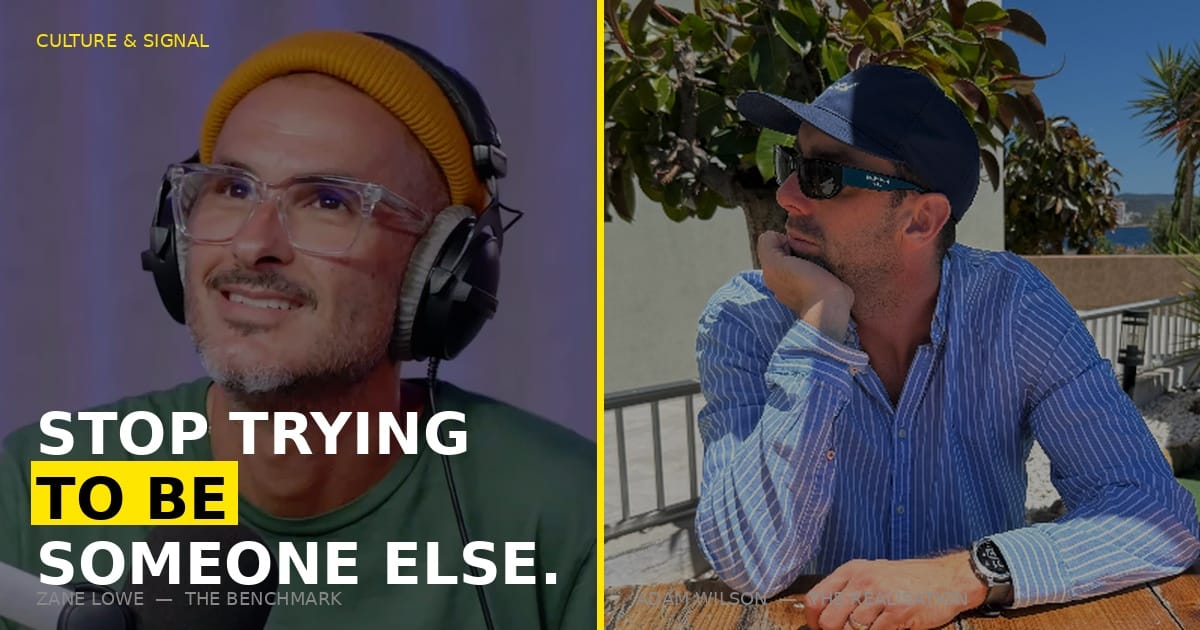
Many years ago I spent time at a local radio station practising how to speak on air. I spent most of it trying to sound like Zane Lowe. It didn't work. Firstly because he is from New Zealand and has one of the most distinctive voices in broadcasting. More importantly because he is one of the best music interviewers in the world and has spent decades becoming that. After many failed attempts I came to a simple realisation. It is only when you stop trying to be someone else and commit to being yourself that you have any chance of standing out.
It is interesting but when you look closely you can see this principle playing out time and time again. The problem is we tend to see the finished product and never stop to acknowledge the journey that got someone there.
Conor McGregor started as a UFC fighter. Over time he earned the right to launch not just one but two drinks brands. Proper Twelve whiskey and Forged Irish Stout were not random business decisions. They were the natural extension of a persona he had been building in public for years. The suits, the swagger, the Irish pride. By the time he asked for the sale the audience had already said yes.
Kylie Jenner is another example. Long before she launched a beauty brand millions of people were already watching how she looked, what she wore and how she presented herself. The products were almost inevitable. She had spent years in public showing women something they wanted to be part of. By the time Kylie Cosmetics launched the audience was already there waiting.
What both of them understood, whether consciously or not, is that permission comes before the product. You earn the right to ask for something by consistently showing up as yourself first.
I am still learning this. It is easy to think you have it figured out and then find yourself tempted by a new format, a new platform, a new approach. What I am learning is that it is fine to change and evolve. The one thing you cannot do is stop. Or get pulled away by the next shiny object before the current thing has had time to build.
A clear example of this is writing this series. Right now around ten people read these articles. A short video on the same topic can get thousands of views on social media. It would be easy to think that is where I should be putting my energy. But it is through sticking to this process that I have been able to develop the depth of thinking that a short video could never give me. And slowly, piece by piece, build something that stands for something specific.
Writing this series has been the best exercise I have done in years. It forces me to take everything I am absorbing from books, podcasts and twenty years of experience in marketing and actually work out what I think. The number one thing it has taught me is that so much of what moves people happens beneath the surface. Whether that is how you show up online or how you show up for your community in real life, the things that actually create connection are rarely the things you planned.
Are you showcasing the real you? What is it you want to purposefully show you stand for?
Culture & Signal is an ongoing exploration into how brands grow from inside communities, how ritual creates meaning, and why signal only lasts when participation stays real.
Explore the full series → HERE